


The short answer on lion’s mane
Lion’s mane is a shaggy white mushroom that has been valued for centuries in traditional Eastern medicine and is often called the “smart mushroom” for its reputation around focus and memory. Early research is genuinely interesting, especially around the way its natural compounds may support nerve cells, but the human studies so far are small and limited, so we make no promises. We fold lion’s mane into our Super 17 mushroom coffee because we believe in it as part of a nourishing daily routine, not as a cure for anything. Here is an honest look at what is known, what is still being studied, and how we use it.
Of all the functional mushrooms folks ask us about, lion’s mane is the one that sparks the most curiosity. People have heard it called the “smart mushroom,” and they want to know whether that reputation holds up. We are the Sisters of the Valley, and we love these fungi, so let us walk through what lion’s mane actually is, what the science is beginning to show, where it fits in a healthy life, and how we work it into the medicine we make, all in plain language and without overselling a thing.
What lion’s mane is
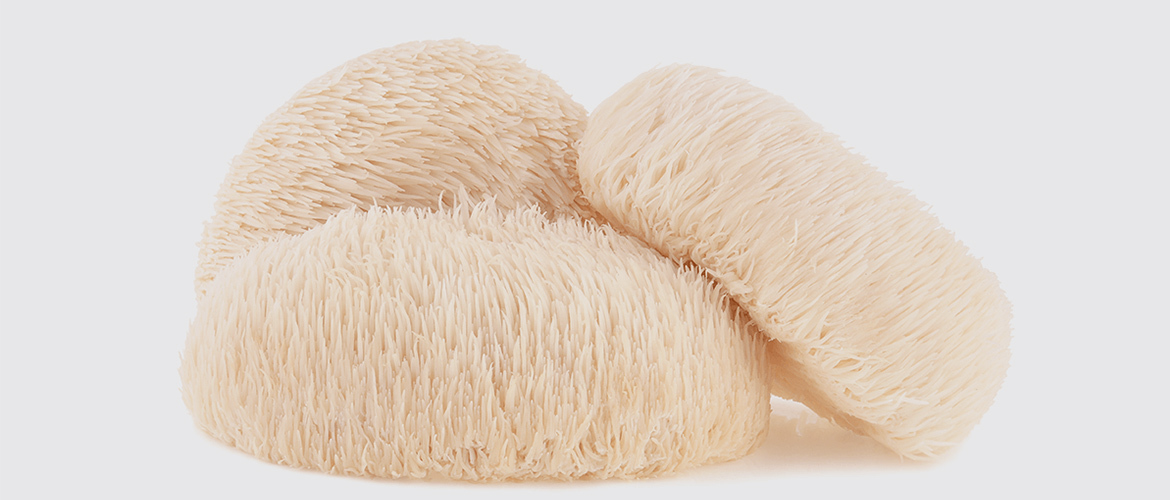
Lion’s mane, known to botanists as Hericium erinaceus, is an edible mushroom with a striking look, a rounded white mass of soft, dangling spines that really does call to mind a lion’s mane or a waterfall of icicles. It grows on hardwood trees and has a long history in the traditional medicine of Japan, China, and other parts of East Asia, where it has been used both as food and as a tonic for the mind and body. In the West it has become popular more recently, showing up in powders, capsules, teas, and blends like our mushroom coffee.
What makes scientists curious are the natural compounds it carries, with names like hericenones and erinacines, which laboratory work suggests can influence nerve growth factor, a protein involved in the health of nerve cells. That is the seed of lion’s mane’s “smart mushroom” reputation. We think it is a beautiful idea, and we also think it deserves honesty about how early the human evidence still is.
There is something worth sitting with in that gap between tradition and laboratory. For generations, people across East Asia used lion’s mane without a single clinical trial to point to, guided instead by long observation and inherited wisdom. Modern science is now circling back to ask, in its careful and slow way, whether those traditions hold up, and the early answers are intriguing. We have a deep respect for both kinds of knowing, the ancestral and the scientific, and we try to hold them together honestly. The old traditions are a good reason to take lion’s mane seriously; they are not a substitute for evidence, and the evidence is still being gathered. Both things are true, and we see no need to pretend otherwise to sell a cup of coffee.
What the science is beginning to show
Here is the honest state of things. Lion’s mane is one of the more studied functional mushrooms, and the early findings are encouraging, but we want to be candid that most of the strongest evidence so far comes from laboratory and animal work, with human studies that are still small and limited. Some early human research has explored effects on cognition, stress, and mood and found the mushroom promising, while also being clear that much more work is needed before anyone can speak with confidence. Researchers are interested partly because some of lion’s mane’s compounds appear able to cross the blood-brain barrier, a protective filter that keeps many substances out of the brain, which is one reason scientists think it may hold potential for brain health.
One idea that draws a lot of attention is neurogenesis, the brain’s way of forming new connections and supporting the cells involved in learning and memory. Laboratory work has suggested lion’s mane may help support that process. That is genuinely exciting, and it is also exactly the kind of finding that gets oversold in the wellness world, so we will say plainly: this is a promising area of study, not a settled fact, and lion’s mane is not a treatment for any medical condition. If you want to follow the research as it develops, you can see active studies listed on the government’s ClinicalTrials.gov.
| What you may have heard | The honest version |
|---|---|
| “It boosts memory and focus” | Early studies are promising; human evidence is still small and not conclusive |
| “It regrows brain cells” | Lab work suggests it may support nerve-cell processes; this is a research area, not a proven effect in people |
| “It treats depression” | Some early studies looked at mood, but lion’s mane is not a treatment for depression; please see a professional for that |
| “It prevents Alzheimer’s and Parkinson’s” | Researchers are studying these questions; nothing is established, and no food prevents these diseases |
Prevention as a way of thinking, not a promise
One thing we find genuinely hopeful is that some of the research on functional mushrooms is pointed at prevention rather than treatment. The idea is gentle and old-fashioned, really: that nourishing foods, eaten regularly as part of a balanced life, may help support long-term health. That is a very different claim from saying a mushroom cures a disease, and it is the spirit in which we offer lion’s mane. We are not asking you to expect a miracle. We are inviting you to consider a nourishing, plant-based addition to an already caring routine, the way people have done with this mushroom for centuries.
We will say this carefully, because it matters: a healthy diet that includes functional mushrooms is a lovely thing, but it is not a substitute for medical care, and no food on earth can guarantee you will avoid illness. If you are worried about your memory or your mood, or about a condition in your family, the kindest thing you can do is talk with a doctor. Lion’s mane can be a small, pleasant part of a healthy life. It is not a shield, and we would never tell you it was.
Lion’s mane in our Super 17 mushroom coffee
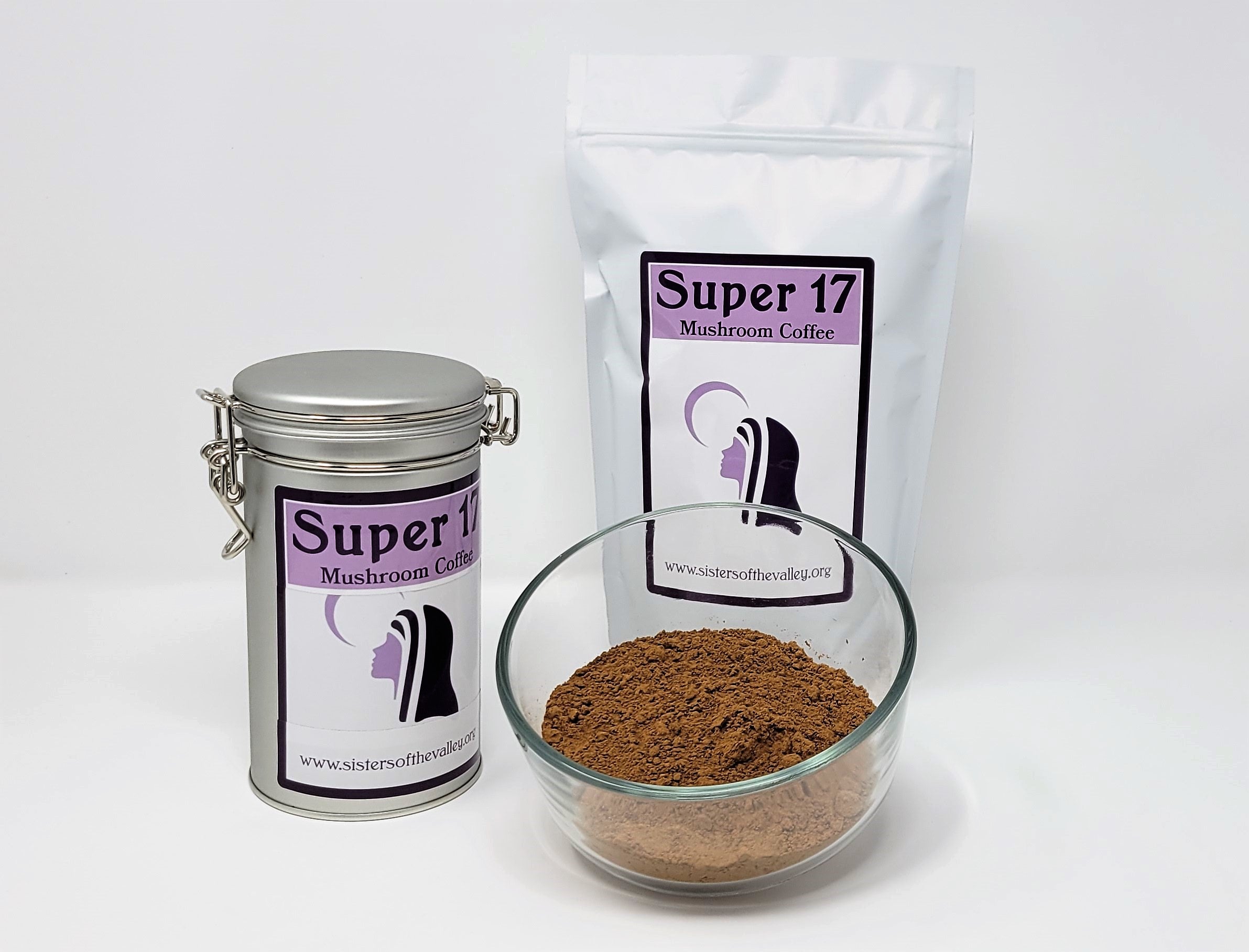
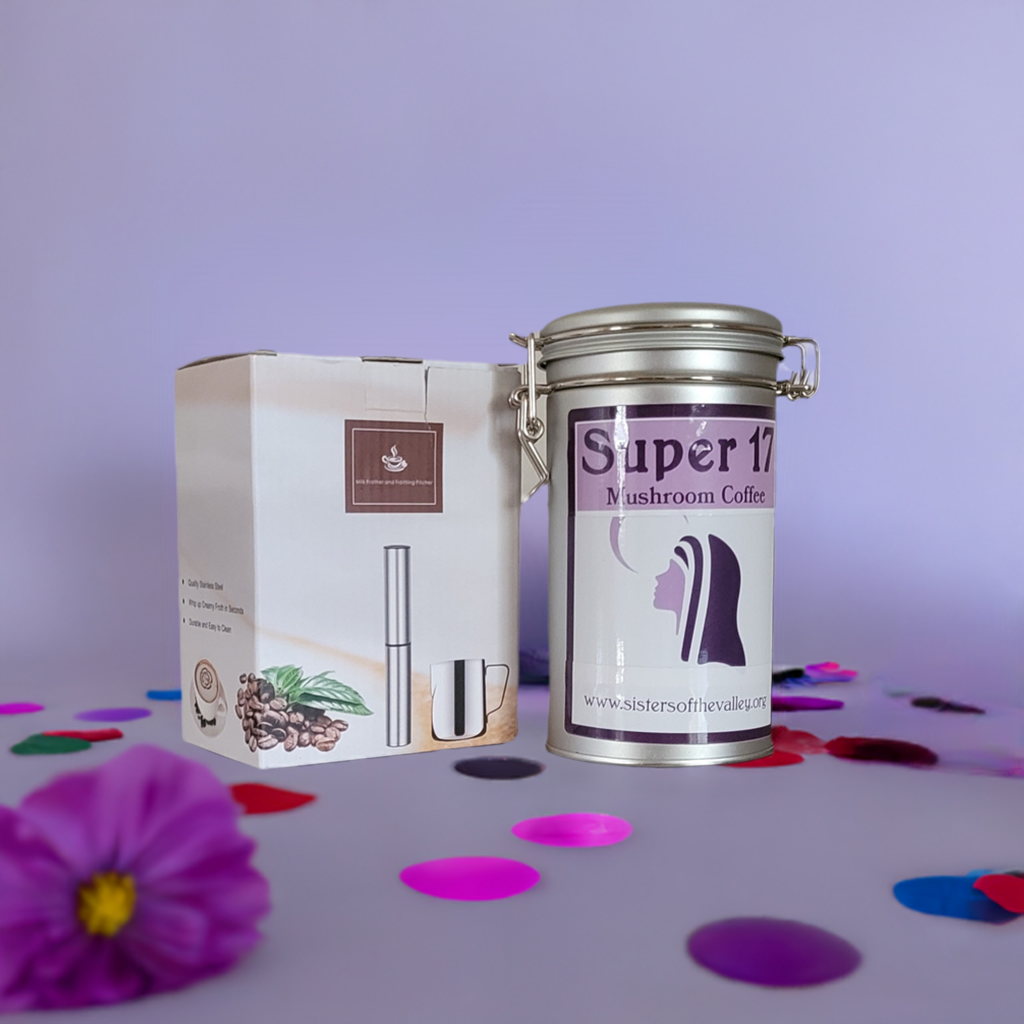
Lion’s mane is one of seventeen carefully chosen ingredients in our Super 17 mushroom coffee, sitting alongside other functional mushrooms like reishi, cordyceps, turkey tail, chaga, and shiitake, plus grounding roots and warming spices such as ashwagandha, turmeric, ginger, cinnamon, and a little cocoa and black tea. We blended it to be a tasty, low-caffeine alternative to a regular cup, with less than ten milligrams of caffeine per serving, that gives your body some nourishment a coffee bean alone never could. Like everything we make, the blend is mixed by hand and timed to the cycles of the moon.
Why a coffee rather than a pill? Because a warm daily cup is a ritual people actually keep, and because pairing these mushrooms with familiar, comforting flavors makes them easy to enjoy morning after morning. We think of it as a gentle, everyday way to bring lion’s mane and its mushroom companions into your life, not as a dose of anything dramatic.
| A few of the mushrooms in the blend | Why people reach for it |
|---|---|
| Lion’s mane | The “smart mushroom,” studied for focus and brain health |
| Reishi | Long valued in tradition as a calming, grounding mushroom |
| Cordyceps | Often associated with everyday energy and stamina |
| Turkey tail and chaga | Traditionally used as nourishing, supportive tonics |
We share these as the reasons people have traditionally valued each mushroom, not as medical claims. Functional mushrooms are still a relatively unexplored corner of nutrition, and we would rather be honest about that than pretend otherwise.
“We love these mushrooms, and we are also honest about them. We do not sell miracles. We make a nourishing cup by hand, with prayer and intention, and we let the science keep unfolding at its own pace. Our promise is care and honesty, never a cure.” With love, the Sisters of the Valley
How to choose a quality lion’s mane product
The functional-mushroom shelf has gotten crowded, and not every product is made with the same care. If you are shopping for lion’s mane, whether from us or anyone else, a few honest questions will steer you well. We hold ourselves to these same standards, so we are glad to share them.
| Look for | Why it matters |
|---|---|
| Published lab testing | Confirms potency and purity and screens for contaminants you do not want |
| Clear about what part of the mushroom is used | Fruiting body and mycelium carry different compounds, so transparency matters |
| Honest, measured claims | Be wary of any maker promising a cure; the science is still early |
| A full, readable ingredient list | You should know exactly what is in the tin and where it came from |
That distinction between the fruiting body, the visible mushroom, and the mycelium, the root-like network beneath it, is one researchers actually pay attention to, since the two carry different natural compounds. A maker who is open about these details is usually a maker who cares about the rest, too. We publish our testing and our full ingredient lists for exactly that reason: we would rather you trust us because you can check our work than because we made a big promise.
How to enjoy lion’s mane safely
Functional mushrooms are generally well tolerated, but a little common sense goes a long way. Start small and see how your body feels. If a serving does not agree with you, take less or stop. As we like to remind folks, mushroom coffee is a nourishing addition to a real diet, not a meal in itself, so keep eating, sleeping, and living well. If you are pregnant or breastfeeding, take medications, or have a health condition, talk with your doctor before adding any new supplement, including functional mushrooms. For balanced, plain-language guidance on choosing and using supplements wisely, the National Center for Complementary and Integrative Health is a trustworthy place to read more. None of this is meant to alarm you. It is just the honest care we would offer anyone we love.
About the Sisters of the Valley
We are a women-led sisterhood based in Merced, California, making plant-based wellness products by hand. We grow plants, create our own formulations, and make everything in small, fresh batches timed to the cycles of the moon, in a spiritual environment, with prayers for the people sewn into every tin and jar. We third-party lab test our batches for potency and purity, and we ship free across the country where the law allows. Beyond our CBD oils, salves, capsules, teas, and soaps, our mushroom lab is devoted to wellness-centered mushroom products, with our Super 17 mushroom coffee at the heart of it. We are not a big-box brand and we are not making medical promises. We are a small circle of women who believe plant and fungal medicine should be made with care and offered with honesty. You can read more about us on our story page, and you can read our testing on our lab test results page.
Frequently asked questions
Is lion’s mane really a “smart mushroom”?
That nickname comes from its long traditional use and from early research into its effects on focus and brain health. We think it is a charming name and a promising area of study, but we would gently caution against taking it as a guarantee. The human evidence is still limited, and lion’s mane is a nourishing food, not a brain pill.
Can lion’s mane prevent or treat dementia or Parkinson’s?
No food can prevent or treat those conditions, and we would never claim lion’s mane does. Researchers are studying functional mushrooms and brain aging, which is hopeful, but nothing is established. If you are concerned about memory or a neurological condition, please talk with a doctor.
How do the Sisters use lion’s mane?
We include it as one of seventeen ingredients in our Super 17 mushroom coffee, our low-caffeine, hand-blended coffee alternative. It is an easy, enjoyable way to bring lion’s mane and other functional mushrooms into a daily routine.
Do the Sisters sell mushroom grow kits?
Our mushroom work centers on our Super 17 mushroom coffee, where lion’s mane is a key ingredient. If you would like to grow at home, check our mushroom spore kits page for what is currently available, and reach out to us with any questions.
Is mushroom coffee safe? Will it keep me up?
Our Super 17 blend is low in caffeine, less than ten milligrams per serving, so most folks find it gentle. As with any new food, start small and notice how you feel, and stop if it does not agree with you. If you have a health condition or take medication, check with your doctor first.
How do I know your products are what they say?
We third-party lab test our batches for potency and purity and publish the results. You can read them on our lab test results page before you ever buy.
A gentle invitation
If the “smart mushroom” has caught your curiosity, the easiest way to try it is in a warm, nourishing cup. Lion’s mane is one of the seventeen ingredients in our handmade Super 17 mushroom coffee, made with care and offered with honesty. Take a look, read our lab results, and reach out to our sisterhood with any questions. We would love to help you find a gentle, everyday way to enjoy these remarkable fungi.
This article is for educational purposes and is not medical advice. Our products are not intended to diagnose, treat, cure, or prevent any disease. Please talk with a qualified healthcare professional before adding any new supplement, including functional mushrooms, especially if you are pregnant or breastfeeding, take medication, or have a health condition.



Comments are closed.