


The Sisters Make a Global Call for Participation in Public Comments Regarding Hemp Industry Consolidation
July 10, 2025
California is on the brink of setting a dangerous precedent that could reverberate across the country and the globe. A new set of regulations being pushed through the Department of Public Health (DPH) under AB8 threatens to reclassify full-spectrum hemp as a controlled substance. This quiet legislative shift would drive out small hemp farmers, erase non-psychoactive wellness products from store shelves, and hand total market control to the dispensary lobby and the Track and Trace corporation, Metrc.
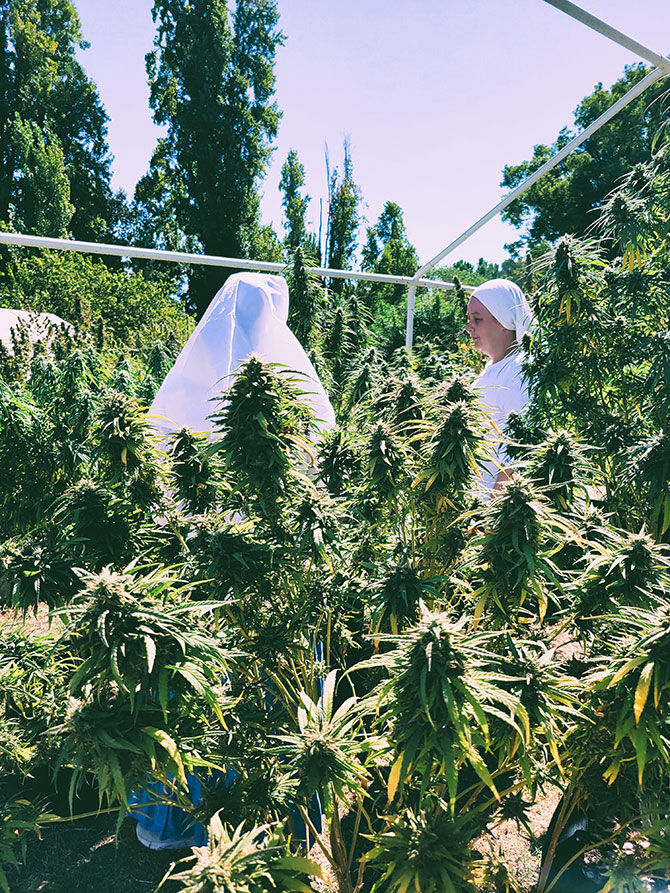
This isn’t about safety. It’s about food chain control. It’s about the extinction of small farms. And it’s about the continued suppression of a cooperative, feminine plant that has long offered natural and safe relief to pain sufferers, cancer patients, and the chronically ill.
The US stopped counting farms under 10 acres decades ago, and small farms—like ours—are dying off. These are the farms that spend their money locally, give back to their communities, and operate ethically and sustainably. And now, a handful of men behind closed doors are trying to kill what little is left of California’s independent hemp economy. If they succeed, other states and nations may follow.
Read letter from the Sisters of the Valley to the Public Health Department (below). This letter outlines the history, the harm and the hypocrisy of this proposed legislation.
We need your help. Please take three simple actions to protect the hemp economy and small farming communities:
- Mail three letters to the people behind the policy shift — sample letters below
- Send three emails to those same officials or others — email addresses and physical addresses of all the players are included in a contact list at the end of this article.
- Make three phone calls to demand they stop the reclassification of non-psychoactive hemp (also in contact list near the end of document)
- Join the Public Hearing from your phone or desktop on July 28th, 2025 at 10 a.m. pacific time. Details at end – scroll down.
You do not need to call Senator Anna Caballero unless you want to thank her for trying to bring transparency and reason into this conversation.
Watch this short video from the Sisters.
Remember, there is a deadline. Public comments close July 28th, and then they have every intention of finalizing this foul law.
Do something now. Lawmakers understand paper, calls and emails.
This is how we fight back. With unity, with voices, with ink and paper.
Let’s make sure California hears us loud and clear.
What follows are these resources:
a) The letter we sent to the Public Health Department that questions the sanity of this bill, and the motivations.
b) A letter you can send, with the addresses provided in the header.
c) A phone script you can use to call in.
d) A bar code and details for joining the public comments session on July 28th (remember, that’s the last day!)
e) And a list of contacts you can call or email.
OUR LETTER OF JULY 10 TO THE PUBLIC HEALTH DEPARTMENT
Sisters of the Valley, Inc.
www.sistersofthevalley.org
10 July 2025
California Department of Public Health, Office of Regulations
P.O. Box 997377, MS 0507
Sacramento, CA 95899-7377
RE: DPH‑24‑005 – Public Comment on Proposed Regulations (DPH-24-005) and AB8
To Whom It May Concern,
The Vanishing Hemp Industry
California, once a beacon for agricultural innovation and herbal wellness, is now presiding over the slow death of its ethical hemp industry. CDPH’s own licensing data tells the story: hemp manufacturing licenses have declined every year since 2021. In 2023, there were over 600. Today, less than half remain. Over 100 licensed hemp manufacturing businesses are now expected to shut down or leave the state due to the finalization of DPH‑24‑005. These losses correlate directly with the state’s increasing regulatory hostility toward non-intoxicating hemp products.
Meanwhile, similar trends can be seen in the broader cannabis market. According to the Department of Cannabis Control’s 2024 market report, small-scale cannabis cultivators and manufacturers are exiting the industry in growing numbers, while dispensary licenses have stabilized or increased. Though California has built the largest cannabis economy in the world, nearly 60% of total consumption still comes from the unlicensed market. Legal cannabis sales have fallen 19% since 2021, and excise tax revenue has dropped by 44%.
In both the hemp and cannabis sectors, we are seeing the same story: small players squeezed out, market share consolidated, and community access to safe, plant-based medicine eroded.
The proposed formalization of emergency regulations through DPH-24-005 and legislative action via AB8 is not only unnecessary, but harmful. Together, these measures reclassify non-psychoactive hemp as if it were intoxicating cannabis, allowing regulators to impose taxes, licensing fees, and surveillance mechanisms like Track and Trace that were never intended for products as psychotropic as dandelions.
This legislation serves two purposes: (a) to drive out small players who cannot shoulder the burden of dispensary-level compliance, and (b) to consolidate the industry into the hands of a few powerful corporations. It sets a dangerous precedent. If functional, non-intoxicating hemp can be regulated like cannabis, what stops the state from doing the same with turmeric? Or chamomile? Or Reishi mushrooms? Will Track and Trace soon demand oversight of our mushroom coffee blends?
California is not protecting consumers here; it is expanding a regulatory empire under the guise of public safety.
These regulations are not about safety. They are about consolidating the wealth into the hands of a few.
Who We Are: A Case Study in Compliance and Compassion
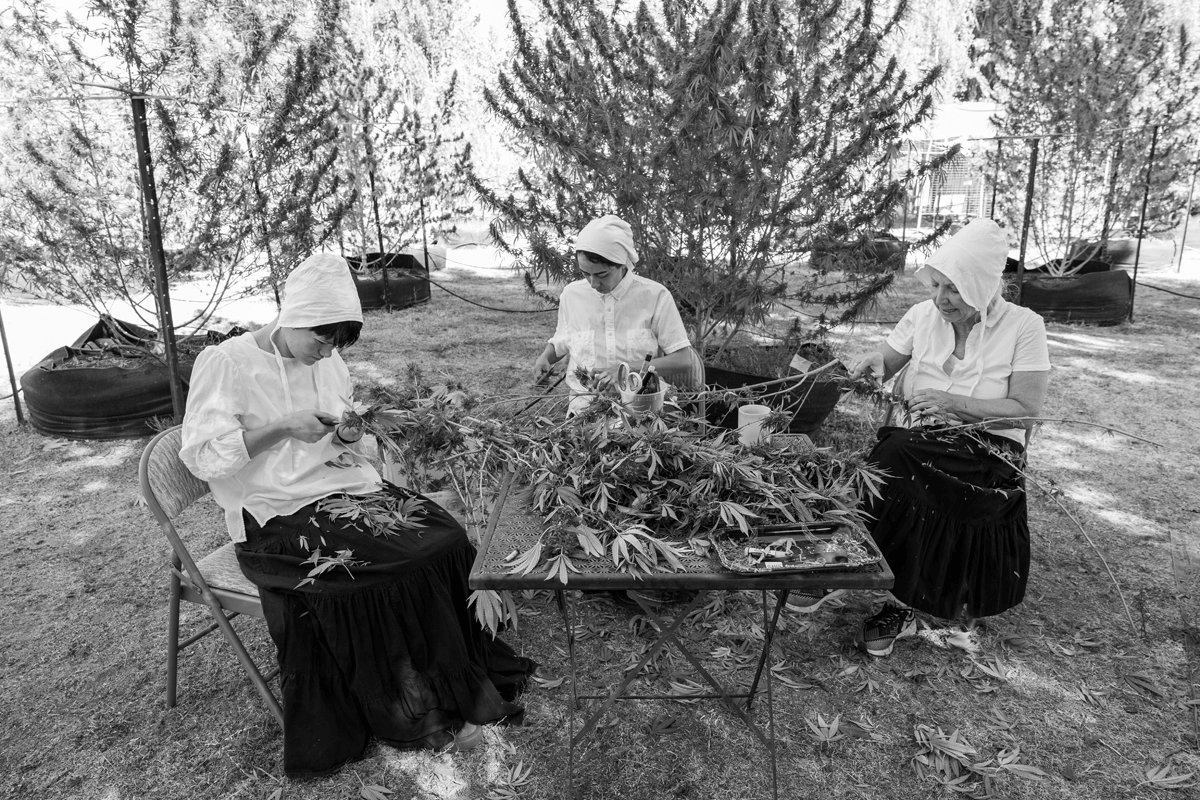
Sisters of the Valley, Inc. is a licensed, tax-paying, woman-led business in Merced County, operating since January 2015. We began as a social experiment: could a handful of women live sustainably on one acre of land, growing hemp and making plant-based, non-intoxicating wellness products? Could we make a one-acre farm support the women economically and make a cultural contribution to the county we live in?
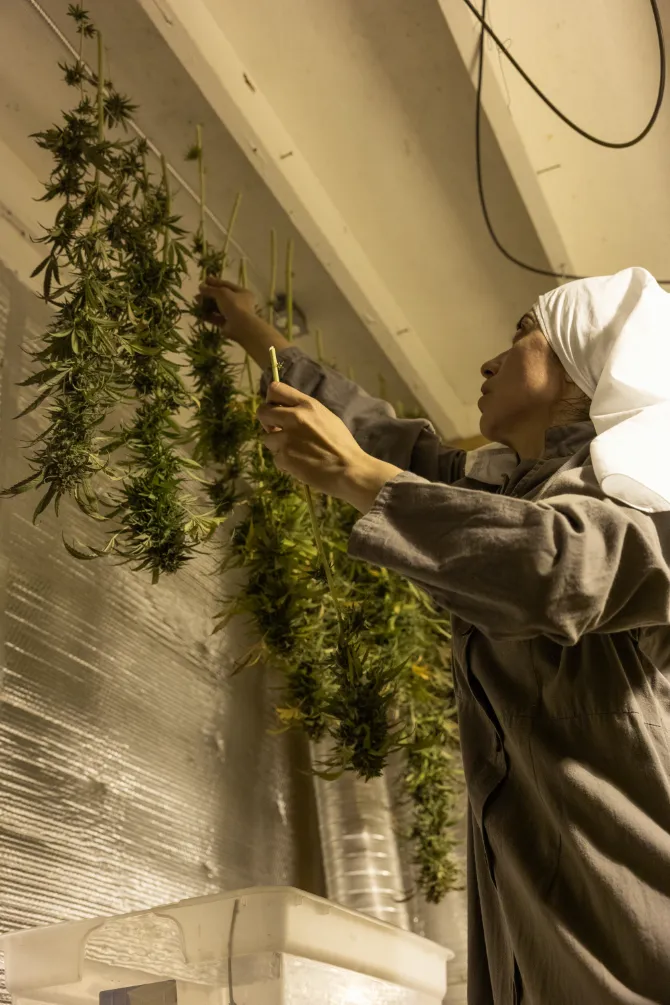
For ten and a half years, we have. We complied with every change in law and regulation. We registered with the CDPH and the CDFA. We paid taxes, tracked batches, issued COAs, and received grants and low-interest loans from the State and Federal governments. Our oils, salves, and gelcaps have traveled the globe, used by people fighting chronic pain, insomnia, and cancer.
Importantly: we have never made or sold smokable products. We do not sell vapes, joints, or any form of combustibles. We have never offered anything psychoactive. Our focus has always been on non-intoxicating, full-spectrum, plant-based wellness for adults. This is our lane; this is our specialty.
Our marketing is not aimed at the young, it is aimed at those in chronic pain, but we also have a large library of information that we cannot restrict access to, when the new generations need to understand hemp and all it can do for the planet and the people here.

How Legislation Erases Small Farms
Small farms are already an endangered species in California. For decades, federal and state agencies have excluded farms under 10 acres from their agricultural census, effectively writing them out of existence. Yet these micro-farms—often family-run or women-led—are the backbone of rural economies. They spend locally, hire locally, and reinvest profits into their communities. By contrast, large corporate farms centralize wealth and send profits out of state or overseas. The new hemp regulations compound this erasure. Written for industrial-scale cannabis operations, they impose burdens that small farms cannot bear—pushing independent growers and herbalists out of compliance and out of business. In doing so, the state is not just regulating an industry—it is accelerating the extinction of community-based agriculture.
Grandfathered Companies Like Ours
Under California law, businesses that have operated in good standing under existing licensing systems for a decade or more are protected from sudden extinction by new regulations. There is no anti-grandfathering clause in AB8 or DPH-24-005. Therefore, Sisters of the Valley—and companies like us—retain our right to operate.
The new legislation, however, essentially blocks us from selling to the people in our own home state. The proposed rules ban us from selling in stores in our home state, not because we are unsafe, but because three men behind closed doors—Governor Gavin Newsom, DPH Director Dr. Tomás Aragón, and Track-and-Trace advocate and enforcement chief Bill Jones—decided that non-psychoactive hemp can simply be reclassified as ‘psychoactive.’ They made this decision behind closed doors, formalizing an emergency order without industry participation, in direct contradiction to global standards established by the UN, Israel, Canada, and Germany.
This is not science. This is politics and market consolidation. It is equivalent to asking a vitamin shop to comply with liquor store laws, so that all the vitamin shop owners go out of business and a few can own their industry.
Fun Facts:
In medieval Europe, women were the primary brewers of beer. A broom over the door signaled beer for sale, and cats kept the grain safe from mice. But as men sought control of the industry, women brewers were smeared as witches and driven out of their own trade.
Today, in a weird repeat of history, we chose non-psychoactive hemp to avoid overregulation, yet now we’re told there’s no room for specialists outside the dispensary system. A craft built by women is being regulated out of existence.
We also have a patent pending from the US Patent Office related to our moon-cycle medicine-making practices; that which would have gotten us burned at the stake less than 150 years ago.

Regulatory Capture: The Real Driver
It is obvious why METRC, the Florida company that has a nationwide monopoly on track and trace, is pushing hemp into dispensaries. They want to make money from every plant grown.
The dispensary lobby also pushed for these changes, because they are hurting. They sat at a board meeting and said ‘why are we letting CBD be sold outside of dispensaries? We need to stop that right now!’
Yet those same dispensary owners have gone on record stating that CBD sales are negligible in their stores and that CBD is not interesting to their clients.
For ten years, we’ve tried to get our products into dispensaries. We were told repeatedly: ‘our customers don’t care about CBD’, or ‘CBD makes up less than 1% of our sales’. The gatekeepers of the cannabis market (the dispensaries) prioritize getting high over getting well. The budtenders are trained on terpenes, what is the stoniest, not on what is the most healing. Budtenders are unlikely to know about CBDa, CBG, and CBN as specialists in the industry do.
The state also prioritized getting high over getting well, by licensing dispensaries and psychoactive cannabis YEARS before they licensed hemp.
We don’t sell smokables. We don’t sell to gas stations. We aren’t the problem.
Hot CBD and a Misplaced Crackdown
To justify their overreach, policymakers pointed to ‘hot CBD’ — mislabeled vape pens and smokable hemp products, often sold in gas stations and corner stores without age verification. These are the products that found their way into the hands of minors.
Instead of focusing enforcement on those high-risk retail environments and illicit players, California chose to punish the entire wellness hemp sector. The result? A blanket ban on all detectable THC, even in non-smokable, lab-tested, full-spectrum remedies. We don’t sell vape pens. We don’t sell smokable products. We never have. All of our offerings test consistently under 0.3% THC, in accordance with the international UN standard for non-intoxicating hemp.

Three Impossible Requirements
Why can’t you meet the new requirements, one might ask? Here’s why:
- No Detectable THC: In 2016, we tried making zero-THC products using crystalline CBD from a university lab in Italy. The result? The resultant oral medications caused headaches. And in topicals, the crystalline didn’t bind at all. This requirement is bad science and bad public policy and shows either a complete lack of understanding by the regulators, or this move to consolidate the industry is very purposeful and irrespective of common sense and science.
- 5-dose packaging: We sell 100-count gelcaps to cancer patients for $150. Packaging those into 20 bottles would be a cruel and unnecessary expense. It raises costs exponentially on cancer patients and chronic pain sufferers. And no one will buy from us this way.
- 18+ website access: Our website only sells to credit card holders. Our library is open to all, including mothers seeking remedies for children’s eczema. Barring access to our educational content from minors is not protective in a time when the planet requires everyone to understand the healing potential of the hemp plant, for both the people and the planet.
Our products comply with the internationally accepted hemp standards of 0.3% THC or below, a threshold upheld by major jurisdictions including the U.S., Canada and the European Union. A few countries (like Israel and the UK) still use a more restrictive 0.2% limit, but the global trend is moving toward 0.3%. California’s regulation is moving against the global trend toward upping the limit, not taking it all out. This legislation proves that California regulators either don’t understand the science or have nefarious reasons behind pushing these new laws upon the land, without a ballot initiative.
The Consequences of Reclassification and Track-and-Trace
Even with Grandfather protection rights, the new legislation puts us at risk of losing financial services. And if we made a move into the dispensary market, we would absolutely lose all these services:
- Banking. The moment our products are reclassified as psychoactive, we lose banking.
- Compliant Accounting. Our bookkeeping service (Bench, based in Montreal, Canada) and other vendors will drop us for being a “regulated drug company.”
- Shopify store. That’s already beginning, payment options are disappearing from our customers’ checkout experience since October when the emergency regulations were passed. We were offered Shopify pay, then it was taken away. We were offered Apple Pay, then it was taken away.
- Better Business Bureau accreditation. Already gone, due to the emergency order.
We are being pushed away from what we do and into a system that strips us of all business protections, financial stability, and consumer trust.
Track-and-Trace: The Hidden Hand Behind the Hemp Crackdown
Track-and-trace is a monitoring system originally designed for intoxicating cannabis products sold in dispensaries. It was never intended to apply to non-psychoactive hemp. Yet, under California’s proposed changes, this burdensome system—run by a private, Florida-based company called Metrc—is being extended to cover wellness products that pose no risk of intoxication or diversion.
This expansion didn’t happen by accident. Bill Jones, Deputy Director of Enforcement at the Department of Cannabis Control, has been a vocal proponent of applying Track-and-Trace to hemp. Though he is a state official, his alignment with Metrc’s financial interests has raised concern among industry stakeholders. Metrc stands to profit enormously from bringing hemp into its data-capture system, charging fees for every transaction, movement, and transformation of plant-based goods.
Bill Jones participated in the internal meetings that shaped AB8 and DPH-24-005. His presence wasn’t incidental—it was strategic. He ensured that the new framework prioritized surveillance and revenue extraction over science and fairness. That is why he appears on our list of recipients. Hemp producers deserve transparency, not targeted obstruction from officials advancing the interests of private tech contractors under the guise of regulation.

Behind Closed Doors and a Push to Make This Into Law Quickly
In late October, Newsom, Tomás Aragón and Bill Jones created an emergency order. In the following weeks, I tried to correspond with the CDPH over the ruling and they would only reply (repeatedly) that the emergency regulations were final and not subject to change.
That wasn’t actually true, unless they know something they aren’t telling us, because it was a temporary order that expires in September 2025.
It took our state senator, Anna Caballero, four months to secure a meeting with CDPH leadership on this issue. On June 11, 2025, we joined a video call with Senator Caballero and her policy director Kyle Kruer. CDPH’s Maral Farsi joined the call. She told us then that the emergency order would expire in September and implied that new legislation was being drafted collaboratively.
Here’s what the Public Health Department didn’t disclose in that meeting.
- That AB8 was already drafted and had simply formalized the emergency regulations.
- That a 45 day public comment period would be opening in two days (from the date of this meeting) We learned about the Public Comments being opened about half way into the 45 day process.
- Because we are over ten years old, we are grandfathered automatically and that there is no ‘anti-grandfathering’ language in the bill, so we are protected. (One would think she would mention that when I hammered on the subject of the Sisters being in business over a decade.)
The Public Health department representative was either ignorant of all these facts or chose not to share. Either scenario is disturbing.
Apparently, a notice was sent out on June 30th to stakeholders, but the Sisters of the Valley were not included in distribution of that notice. I don’t think this is accidental. Even our State Senator of Agriculture was not told about the public comments and was misled in other ways.
All the clues point to the fact that the Public Health Department wants this legislation to slide through, no matter what. I would even go so far as to say that the CDPH is overtly hostile to the industry that feeds them and would like us all to go away, so they only had a handful of large license-holders to manage.

What Other States Got Right
Other states faced similar crossroads—and chose better. In Tennessee, Texas, and Virginia, attempts to lump non-intoxicating hemp with psychoactive cannabis met resistance. Legislators, small business owners, and consumers demanded nuance. They rejected blanket bans, targeted enforcement where it mattered (at the point of sale), and preserved public access to wellness products. They didn’t punish grandma’s arthritis cream to stop corner-store vape pens. They used a scalpel. California is using a sledgehammer.
Worse, California is setting a dangerous national precedent: reclassifying non-psychoactive hemp as intoxicating, not based on science, but politics. If the state can redefine non-psychoactive hemp to force it under cannabis control, what stops it from doing the same to functional mushrooms? To vitamins? To herbal teas?
Our Recommendation
We urge the CDPH and the Legislature to:
- Retain the current regulatory framework – don’t ‘fix’ what isn’t broken.
- Enforce existing laws against bad actors—don’t rewrite science to fit policy.
- Acknowledge the protected status of the companies that have been operating responsibly over ten years, like ours.
- Refrain from reclassifying hemp as intoxicating simply to force wellness producers into the dispensary system, which was never designed for them.
- Put major classification changes to a public vote. If the state intends to override scientific consensus and redefine hemp as psychoactive, it must be done transparently—through a ballot proposition, not backdoor regulation.
California cannot claim to support small farms and rural economies while enacting policies that accelerate their extinction. By redefining non-intoxicating hemp as a controlled substance, the state is handing the entire herbal wellness sector to a handful of corporations. This is not public health—it is regulatory capture disguised as reform. A state built on agriculture should know better.
Respectfully,
Christine Meeusen (Sister Kate), Founder, Sisters of the Valley, Inc.
Postal Box Address: 3144 G Street, Suite 205-125, Merced, California 95340, sisterkate@sistersofcbd.com
cc:
Tomás Aragón, Drafter and Executioner of the Emergency Order; Governor Gavin Newsom, Drafter and Executioner of the Emergency Order; Bill Jones, Champion of Metrc Track-and-Tracing All Hemp Plants, Also Executioner of Emergency Order; Assemblymember Cecilia Aguiar‑Curry, Sponsor of Legislation that Confirms the Emergency Order; Erica Pan, Current CDPH Director & State Public Health Officer; Mark Ghaly, Secretary, California Health & Human Services; State Senator Anna Caballero; Lieutenant Framsted, Merced County Sheriff’s Department; Rutan and Associates (Legal Representation, Sisters of the Valley)

SAMPLE LETTER TO PRINT AND MAIL
[Date] ______________________
California Department of Public Health
Office of Legislative and Governmental Affairs
1615 Capitol Avenue
Sacramento, CA 95814
The Honorable Gavin Newsom
Governor of California
1021 O Street, Suite 9000
Sacramento, CA 95814
Bill Jones, Deputy Director of Enforcement
Department of Cannabis Control
1020 N Street, Suite 301
Sacramento, CA 95814
RE: Opposition to AB 8 and DPH-24-005 — Protect California’s Hemp Industry
To Whom It May Concern,
I am writing to urge you to reject the reclassification of non-psychoactive hemp under AB 8 and DPH-24-005.
This policy change is devastating to California’s small farms, herbal medicine makers, and ethical wellness companies—many of which have been operating safely, transparently, and legally for years. Reclassifying full-spectrum hemp products with trace amounts of THC as controlled substances is not based in science, and it will not make the public safer.
Instead, it will:
- Force small businesses into an unsuitable, costly Track and Trace system designed for cannabis.
- Make non-intoxicating wellness products less accessible to the people who need them.
- Consolidate the industry into the hands of a few large dispensary corporations.
- Destroy jobs and communities built around sustainable hemp farming.
I personally care about this issue because I am a:
☐ Small farm owner, worker or advocate
☐ Small business owner, worker, or advocate
☐ Healthcare or wellness provider
☐ Consumer of hemp-based remedies
☐ Supporter of the Sisters of the Valley and their mission
☐ Advocate for plant-based healing and environmental sustainability
☐ Other: ______________________________________________________________________
California has a chance to lead with wisdom—not follow Florida’s Metrc model of overreach. We do not want a future where functional herbs and natural remedies are treated like narcotics. Let’s preserve California’s unique and thriving hemp wellness industry.
Please:
- Retain the current regulatory framework.
- Enforce existing laws on bad actors without punishing ethical companies.
- Protect small farms and wellness businesses from industry consolidation.
- Do not reclassify hemp as a controlled substance.
Thank you for your time and consideration.
Sincerely,
_______________________________________________
[Signature]
_______________________________________________
[Printed Name]
_______________________________________________
[Printed Address]

Sample Phone Message Script One
Hi, my name is [Your Name], and I’m calling from City, Town or Country
I’m calling to strongly oppose the reclassification of non-psychoactive hemp under AB8 and DPH-24-005. These regulations will hurt small farms, restrict access to plant-based wellness products, and consolidate the industry into the hands of a few big players.
Hemp with under 0.3% THC is non-intoxicating and internationally recognized as safe. It should not be treated like a narcotic.
Please protect small hemp businesses, farmers, and consumers who rely on these products. Keep hemp out of Track and Trace and keep it accessible to Californians.
Thank you.
Sample Phone Message Script Two
Hi, my name is [Your Name], and I’m calling from City, Town or Country
I’m calling to oppose the hemp reclassification under AB8 and DPH-24-005. It harms small farms and restricts access to safe, non-intoxicating hemp products. Please make sure my opposition is noted.

The Contact List
Three letters, three emails and three phone calls. All of your outreach should include the first on the list, the California Department of Public Health. If you send them a letter, you can use your other letters, calls and emails for others on the list. It is, however, important that you submit your written comments to the first agency on the list before July 28th of this month. Do put ‘DPH-24-005’ on all correspondence. Lawmakers can’t be asked to connect dots.
California Department of Public Health – Office of Regulations, Mailing Address: P.O. Box 997377, MS 0507, Sacramento, CA 95899-7377
Phone: (916) 558‑1784 General Email: regulations@cdph.ca.gov
Governor Gavin Newsom, Mailing Address: 1021 O Street, Suite 9000, Sacramento, CA 95814 Phone: (916) 445‑2841
Email: go here to open an email to the governor: https://www.gov.ca.gov/contact/
Assemblymember Cecilia Aguiar‑Curry (Sponsor of the Bill that Formalizes the Emergency Order), P.O. Box 942849, Sacramento, CA 94249–0004; (916) 319‑2004
District Office: Davis: 600 A Street, Suite D, Davis, CA 95616 (530) 757‑1034
Email: assemblymember.aguiar‑curry@assembly.ca.gov
Bill Jones, Deputy Director of Enforcement (Part of the Behind-Closed Doors Committee) Department of Cannabis Control, 1020 N Street, Suite 301, Sacramento, CA 95814, Phone: Main Enforcement Line – (844) 612-2322 (request him by name) Email: publicaffairs@cannabis.ca.gov (put PLEASE DELIVER TO BILL JONES) in the subject and DPH-24-005
Dr. Tomás Aragón (Retired CDPH Director & State Public Health Officer) Enforcement (Part of the Behind-Closed Doors Committee) Retired as of January 31, 2025, within two months of executing the emergency order; Now serves as faculty at UC Berkeley School of Public Health, Mailing Address (Berkeley Office): UC Berkeley School of Public Health, 2121 Berkeley Way #5201‑2, Berkeley, CA 94720 Email: tomas.aragon@cdph.ca.gov; Phone: Not publicly listed (CDPH main line is (916) 558‑1784)
Dr. Erica Pan (Current CDPH Director & State Public Health Officer), Assumed office on February 1, 2025, Office of Communications (Emails accepted): media@cdph.ca.gov, General Inquiries Phone: (916) 558‑1784, Public-available direct contact for letters: Dr. Erica Pan, California Department of Public Health, 1415 L Street, Suite 500, Sacramento, CA 95814 (same as CDPH headquarters)
Senator Anna Caballero, District (Merced Office): 510 West Main Street, Suite E, Merced, CA 95340, Phone (Merced): (209) 726‑5495, Email: senator.caballero@senate.ca.gov If you contact Senator Caballero, please just thank her for her support on this issue, because she did try.
Dr. Mark Ghaly, Secretary, California Health & Human Services State Agency
General Email: chhsmail@chhs.ca.gov; Note: Dr. Ghaly’s personal email isn’t listed publicly; general inquiries go to the agency inbox.
Best Way to Use These Contacts: DEADLINE JULY 28, 2025
Postal Mail: Use the physical addresses above for hard-copy letters, be sure to include the Public Health Department
Email: Use email to attach the letter and reach officials quickly; you can send the same 3 letters by email to the same three people, that’s fair.
Phone Calls: Use the phone numbers for follow-up calls, voicemails, or press campaigns. Call the three at the top of the list or any others to register your distress. If you don’t write a letter or email, be sure to call the Public Health Department first.
VIRTUAL PUBLIC HEARING 28 JULY 2025
Public Comments Close July 28th. And they do not want to hear from you, so, do speak up. And do join the open session (virtually, by link) on July 28th at 10 a.m. pacific time.Join the Public Hearing:

-
- Date & Time: Monday, July 28, 2025, at 10:00 a.m. PT
- Join by Zoom: https://cdph-ca-gov.zoom.us/j/818135213
- Meeting ID: 818 135 213
- Phone Option: Dial 1-833-548-0282 and enter the Meeting ID when prompted
Join the CDPH Public Hearing — Click to Join on July 28
No pre-registration is required—just click the link a few minutes before 10 AM PDT on the day of the hearing.
If you need to enter a California town or zip code, use Merced 95340. You are showing up for the Sisters of the Valley and for small farms everywhere.




Comments are closed.