


The centuries-old struggle for women’s independence, community, and the right to provide for ourselves
By Sister Kate, Founder of Sisters of the Valley | November 2026
The greatest threat to an economy built on endless consumption, an economy that puts a profit tax on every step of life, comes from people who no longer need to buy everything from the capitalist system. People who grow their own food, make their own remedies, share their homes, raise children together, care for their elders, and live in harmony with the earth – this is the real threat to capitalism.
For nearly twelve years, the Sisters of the Valley have tried to do precisely that: live communally, live humbly, repair rather than replace, make rather than buy, and support one another rather than purchase a solution to every human need. That makes us a target. And we have fended off our fare share of attacks. We may not be able to fend off this next one, however.
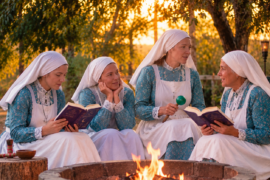
We are Beguine revivalists. The Beguines inspired the establishment of our order because they did all those things. They lived in community, they owned farmland and houses, they practiced their spirituality outside the confines of a patriarchal religion, they were scholars. They were women who shared work, earned a living, and answered a calling larger than a husband’s household or an institution’s permission.
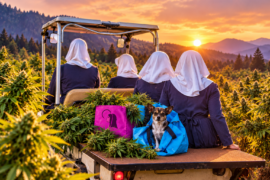
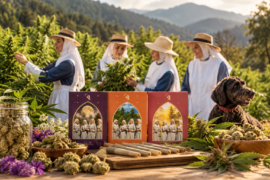
Like the Beguines, we farm, we make plant-based products, we share resources, and we organize our work around the cycles of the moon. The business we established was never the ultimate objective. The business was meant to sustain the community.
The Year is 1400
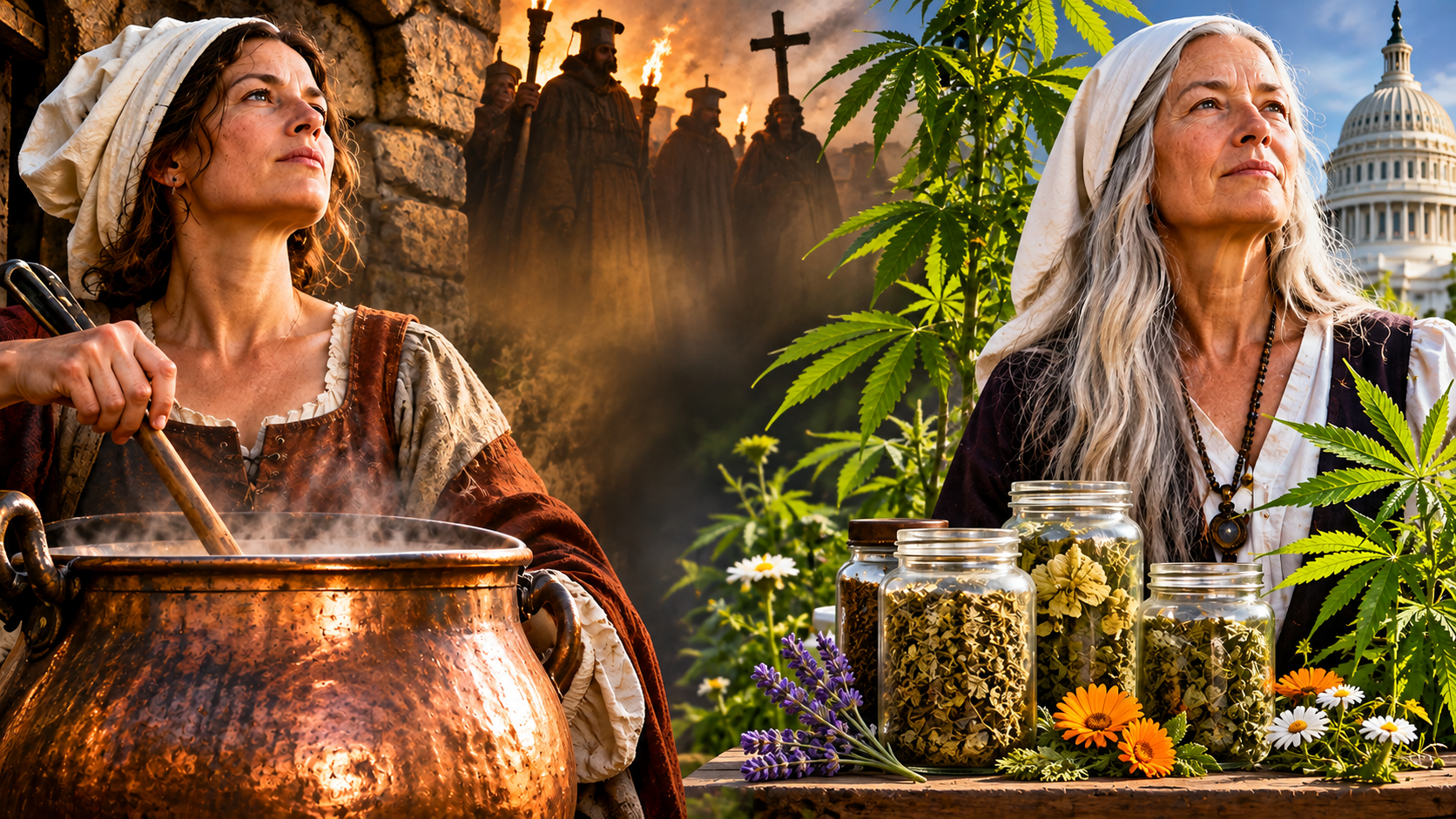
Picture a woman at her brewing kettle. She learned the craft from her mother, who learned it from hers. She knows how to keep a batch safe, how to serve her neighbors, how to earn the money that buys bread for her household. The skill is in her hands. Her reputation is her livelihood.
Now imagine that the Inquisition is coming to accuse any woman working a trade of being a witch. The risk of her continuing her work, and the work of her foremothers, becomes enough that she has to consider stopping that which she’s always done. She has to forego her livelihood or die.
This is the foundation of capitalism. The capitalism we live under today was born here, born of the free labor of women. The church and the inquisitions were tools of the midwifing of the birth of capitalism.
Variations of that story unfolded in other kinds of work. Women passed on knowledge of plants, birth, food preservation, healing, and household production. Some were paid practitioners; others worked within networks of reciprocal care. As professions became formalized and authority over them shifted, women faced new barriers to recognition, income, and independence. The precise histories differ.
It was an effective propaganda machine that convinced the populace that women’s work should be uncompensated and that all compensated work must shift over to the men. It was so effective, that the overlords need not enforce it; the men and the constables and the courts (all run by men) gladly did the work of enforcement.
Over this time, the word ‘God-sip’ which meant to share godly wisdom, was changed to a slander ‘gossip’. The original name given to the Beguines means ‘mumbler’, because that’s how the men in power viewed them.
The losses taken by the women whose livelihoods were stolen so that capitalism could be born, were not only financial. There was also a spiritual loss. Women gathered to pray, interpret dreams, practice rituals, read signs, share remedies, and seek meaning together. In some places, there were women’s temples in every town and city.
Across different times and places, authorities challenged all forms of women’s knowledge and spiritual authority. The gathering places and temples were destroyed over a multi-century effort to weaken the women. And the women were dispossessed of more than land and jobs. They were dispossessed of confidence in their own wisdom.
In *Caliban and the Witch*, Silvia Federici argues that the rise of capitalism must be understood through the suppression and devaluation of women’s labor and autonomy. We do not need to understand all of the history to recognize the pattern that concerns us: when women lose control over their work, they also lose some power to decide how they will live together.
And today, over 800 years later, zoning laws prevent anyone but immediate family living in a house. While we have a critical housing problem in America, there are laws on the books that prevent people from turning their garages into extra housing or allowing someone to live in an RV on the property. We have no half-way houses anymore, as Capitalism only respects the rising value of property. All the institutions of care run on profit, so many people in need of psychiatric care and shelter are roaming the streets in ever growing numbers.
The Year is 2026
The modern version rarely arrives with a proclamation that women must stay in their place. In this case, it arrives as a proclamation from a corrupt federal administration that has made whole plant medicine illegal. A whole species of a plant has been declared as illegal.
Thousands of small businesses that have been operating for over a decade will be shuttered. Thousands of people will be forced to quit doing the very work they have been called by Spirit to do. All this carnage from an edict born of corruption.
Did you know that at one time Quinoa was illegal in south America?
When the Spanish conquistadors arrived in the Andes in the sixteenth century, they encountered Indigenous communities cultivating quinoa, a sacred grain that had nourished their people for thousands of years. Quinoa was more than food. It was part of their spiritual ceremonies, agricultural traditions, and cultural identity; it was a cash crop used for trade.
The Spanish colonizers sought to suppress those traditions, discouraging trade, and outright prohibited quinoa cultivation while promoting European crops such as wheat. The objective was not simply agricultural. It was to undermine Indigenous spiritual practices and replace traditional systems of food production with ones controlled by colonial authorities.
Sound familiar? Five hundred years later, we are watching another government use its authority to restrict a plant that sustains independent communities, supports traditional healing practices, and provides livelihoods outside the control of powerful corporations. The plants are different. The centuries are different. But the struggle over who controls the right to grow, produce, and provide for ourselves is painfully familiar.
What Happened to the Women Brewers?
After capitalism wrestled every last job from the hands of the women, then they had to justify their behavior. The women brewers wore tall, pointed hats so that people could spot them in crowds. The hat became a witch’s cap. The brewer women hung a broom stick over their front door so passers by would know that beer was sold there. Remember, we are in a time when the water could not be trusted and so more people drank beer than water in order not to die. The broom became part of the identity of the witch. And the cat that kept the mice from the barley? Also witch-adjacent.
Is that what will happen to us, do you think? In order to justify shutting down all the CBD wellness businesses, will the corporate oligarchy begin on a propaganda campaign that paints all CBD salve-makers as witches? I so wouldn’t be surprised.
The December 11 federal hemp restrictions eliminate our ability to support the society we’ve built. Our products help sustain a shared way of life. When rules eliminate a small producer’s ability to sell what it has made for years, the loss reaches beyond customers and revenue. It threatens the work that holds a community together.
Our question to lawmakers is why are you letting the corrupt ones do this?
And Now We Are Told We Are Lonely
In 2023, the U.S. Surgeon General warned that loneliness and social isolation pose serious risks to health. So, why do we recognize the damage of isolation while leaving so many obstacles to living in community untouched?
We tell people to seek connection, then arrange daily life so that connection must be squeezed between long commutes, rent payments, and paid appointments. We celebrate self-sufficiency, then make it difficult to share a roof or produce something useful on a small scale. We praise community, then make illegal informal networks of care.
Every Drop of Rain, Every Seed of Grain
We are asking people to recognize what is happening, not just to the hemp industry, but to our ability to build lives outside the control of corporations. Question the laws that prevent families from sharing homes. Question the rules that make it difficult to care for our elderly, our disabled, and those who cannot safely live alone. Question a system that makes it harder to grow food, prepare remedies, practice traditional skills, and earn a modest living from the work of our own hands.
And right now, while there is still time, we are asking Americans to contact their representatives in Congress and demand that they stop the December 11 hemp restrictions. Tell them that destroying small businesses also destroys the communities those businesses sustain. Tell them that we will not accept another generation of independent producers being driven out of their livelihoods to make room for corporations.
We have spent centuries surrendering our independence, one occupation, one tradition, one freedom at a time. It is time to reverse that process.
We are trying to reclaim the right to live communally: to share a roof, a meal, a garden, a skill, a responsibility, and a purpose. We want room for families to double up when they need to, for older people to remain among people who know them, for those needing daily support to have humane places to belong, and for women to practice the skills and spiritual traditions handed down to them without being barred from doing so.
In an economy that seeks profit from every necessity, self-sufficiency can look like lost revenue. Every meal grown rather than purchased, every remedy made rather than bought, every home shared rather than rented commercially is a transaction that never happens. To those who imagine they are entitled to profit from everything, our independence may look like stealing from their right to make money from every drop of rain and every seed of grain.
But the rain belongs to no corporation. The knowledge passed from grandmother to granddaughter is not a corporate asset. And the right to care for ourselves and one another should not depend on whether somebody else can make a profit from it. We are not asking permission to be lonely consumers. We are defending the right to live, work, worship, and belong together on terms of our own making.
Contact your congressman today. Let him know that you don’t accept this unacceptable new legislation.
Read More on This Subject
An Urgent Message to Congress: Do Something Now!
The Sisters have a message for congress, warning them that the only thing this change is doing is increasing the suffering on the planet and making a few of Trump’s friends wealthy.


Comments are closed.