
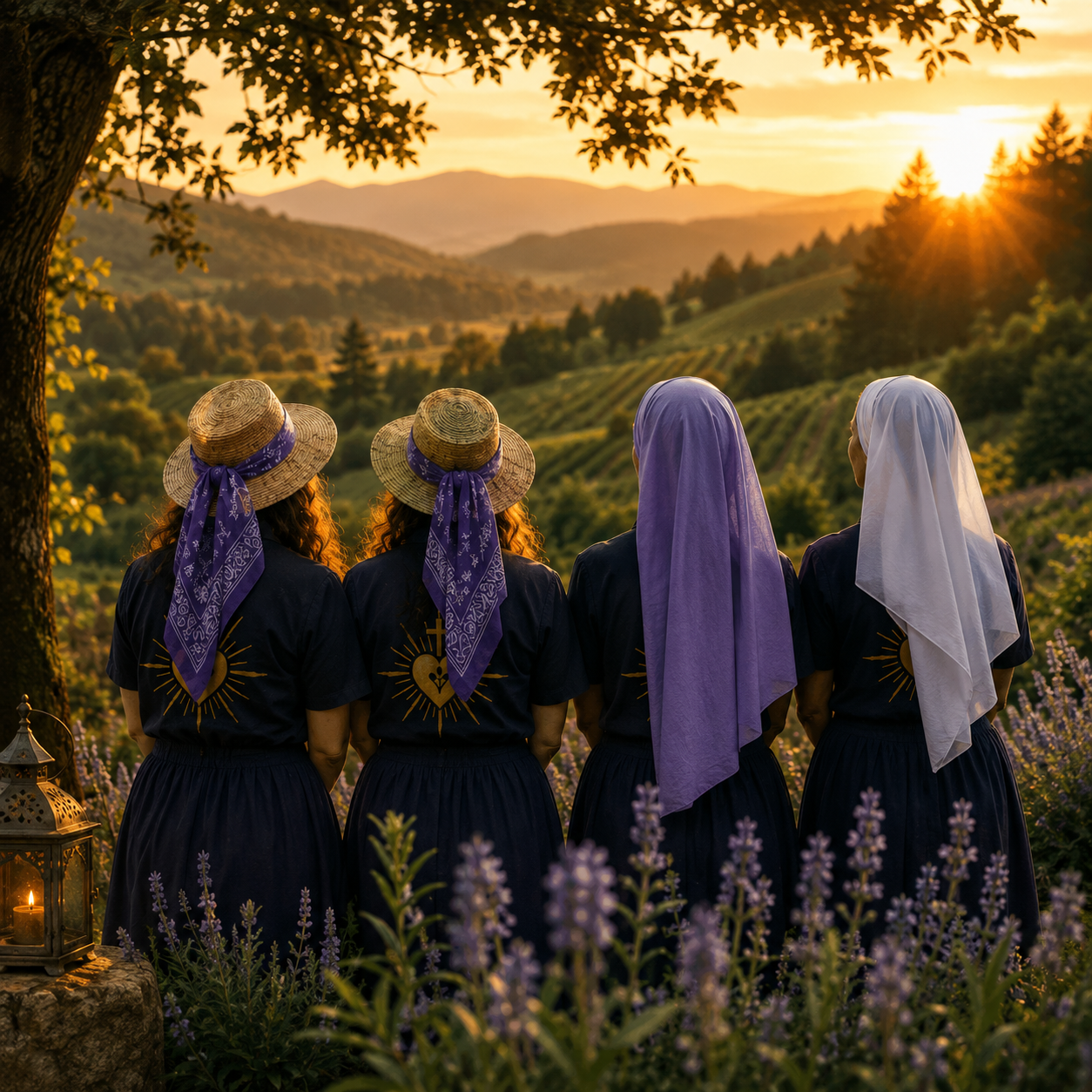


The Sisters of the Valley are putting down roots in Oregon.
Like many of the best things that have happened to us over the years, this partnership did not begin in a boardroom. It began because the Sisters went to a class. More than a year ago, Sisters in Southern California attended a class in Los Angeles taught by Emily Gogol, founder of Grow It From Home. Emily was traveling around California convincing traditional plant nurseries to carry hemp plants by offering something in return: she would come teach their customers, for free, how to grow them.
We found that fascinating. Here was a woman taking cannabis out of the dispensary, out of the industrial grow facility, and putting the plant where we have always believed it belongs — in gardens, in sunlight, and in the hands of ordinary people. That first class began a relationship.
About a year later, Emily came to the Central Valley to lecture at UC Merced. The Sisters attended again, and this time invited her back to our farm afterward. That visit led to another visit, this time with her husband, Ryan, and eventually to a much larger conversation about what the four of us might build together.
For the sake of a happy marriage, Emily has Grow It From Home and Ryan has Infinite Tree. Emily’s work is focused on genetics, cultivation and teaching people to grow. Ryan’s operation faces the licensed Oregon cannabis market and the dispensaries. It turned out to be a very useful division of labor.
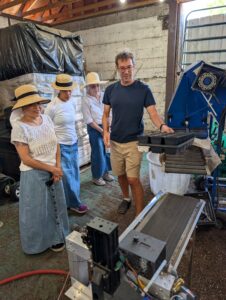
It also became clear very quickly that these were not simply people with interesting ideas. We watched how they grew. We saw the genetics. We saw the infrastructure they had built, the relationships they had established and the systems they had developed to handle agriculture at scale.
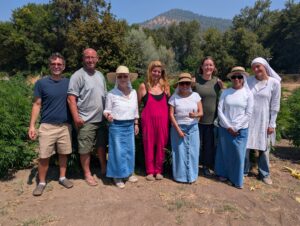
Touring the Oregon operations is like immersing oneself in applied, demonstrated competence. That matters enormously to us. The Sisters have been farming cannabis for more than a decade, and one thing agriculture teaches you rather ruthlessly is that enthusiasm is not competence. Plants don’t care about your business plan. Crops don’t care about your marketing. Farming exposes very quickly whether people actually know what they are doing. Clearly, Emily and Ryan do.
Why Oregon, and Why Now?
The timing of this partnership is not accidental. For more than a decade, the Sisters built our medicine business primarily in the hemp space. Our oils, gelcaps and other products were scientifically formulated around the federal definition of hemp established under the 2018 Farm Bill: cannabis containing no more than 0.3 percent delta-9 THC by dry weight. That framework allowed companies like ours to make products containing substantial amounts of CBD while retaining the naturally occurring trace cannabinoids of the plant. Then Washington changed the rules.
New federal restrictions move away from simply looking at the percentage of THC in hemp and toward limits based on the total amount of THC contained in a finished product. That distinction may sound technical, but for businesses like ours, it is enormous. A two-ounce bottle containing 1,000 milligrams of CBD can be perfectly formulated at the legal hemp ratio and still contain more total THC than the new limits permit. The same problem applies to our gelcaps. It applies to flower.
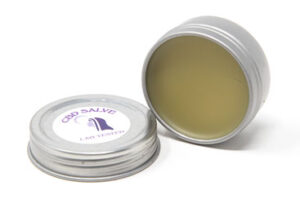
The practical result is simple: products that were legally designed, manufactured, tested and sold under the federal hemp framework can suddenly become impossible to sell under the new one. Implement-ation of those restrictions has become the subject of continued political and industry efforts to delay or change them, but the message to small hemp businesses is already clear. We cannot build our future around the assumption that Washington will preserve the hemp marketplace that allowed us to grow. So we are diversifying.
And Oregon gives us something extraordinarily important: a partner farm licensed to work in both worlds. The Oregon farm can grow hemp flower, but it is also licensed to cultivate high-THC cannabis for the state’s regulated dispensary market. That allows the Sisters to bring our agricultural traditions, our ceremonies and our Kosher Cannabis standards into a legal adult-use market while continuing our work with hemp. For us, that isn’t abandoning hemp. It is refusing to let one change in federal law erase ten years of work.
Two Farms, Different Strengths
The partnership works because each side brings something the other does not. Emily brings years of plant breeding, genetics and cultivation knowledge. Ryan and Infinite Tree bring Oregon cultivation infrastructure, processing systems and established relationships within the state’s dispensary market.
The Sisters bring more than a decade of growing, medicine-making, ritual agricultural practice, a worldwide audience and a brand built around a very specific relationship with the cannabis plant. And we bring our kosher standards.
The roots of Kosher Cannabis require virgin land free from human bloodshed or chemical spills; sun-grown cultivation; ceremonial blessings throughout the growing season; scientific testing for potency and purity; and daily grounding practices by those tending and handling the crop. That means putting our name on somebody else’s cannabis was never going to be enough. We had to become part of the process, as one with the crop and the land.
Beginning the Blessing Cycle
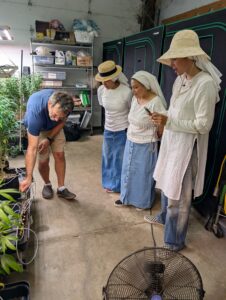
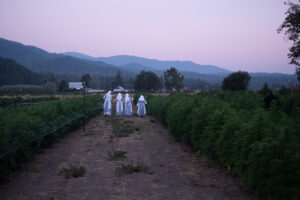
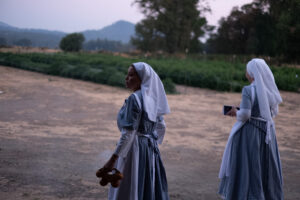
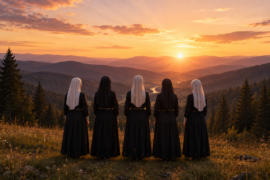
On our August visit to Southern Oregon, the Sisters began that process. We walked the farm. We met the people caring for the plants. We learned how the operation works. We examined the genetics and the cultivation systems. And at sunset, we performed our land blessing.
When we do a land blessing, we do not presume that we are putting our blessing on the land, the land has no need of such things. It needs respect, it feeds us. When we do a land blessing, it is us showing appreciation for the blessing of the land – the land is pure and good and needs no blessings from us. We, the humans, who are nurtured by her, need to appreciate her in all our acts and deeds.
The following morning, at sunrise, we returned to the fields and blessed the crop, again, a ceremony of respect and appreciation for the abundance of Mother Earth. Those two services began the blessing cycle for the Sisters’ first Oregon harvest.
We will return in September to perform the two remaining sunset crop blessings before harvest in October. In November, the harvest will be on the shelves of Oregon dispensaries. Our first chain, Budz Superstore, has already agreed to carry the Sisters’ products in its five Southern Oregon locations, with additional dispensary relationships developing as the crop moves toward harvest.
From One Farm to Another
What began with Sisters attending a free class has become something much larger. It is a partnership between two farms and two families of growers. It combines traditional agriculture with modern cultivation technology, spiritual practice with scientific testing, hemp with high-THC cannabis, and California experience with Oregon opportunity. And most importantly, it gives the Sisterhood another place to grow.




Comments are closed.