


For nearly twelve years, the Sisters of the Valley have grown hemp and made plant medicine from our farm in California’s Central Valley. We have survived a banking crisis, drought, floods, mudslides, a pandemic, changing state regulations, disappearing payment processors, disappearing banking options, social-media attacks, and more than a few predictions that the Weed Nuns would soon disappear. We are still here.
But once again, someone has changed the rules. Unless Congress changes course, a new federal definition of hemp is scheduled to take effect on December 11, 2026, and it will effectively eliminate every CBD product we currently make. Not some of them. All of them. The irony is that our products aren’t intoxicating. Nobody is buying an eight-ounce jar of Sisters’ salve to get high. The problem is the attack on the plant itself.
0.4 Milligrams Per Container
The new federal standard establishes a limit of 0.4 milligrams of total THC and certain similar cannabinoids per container for finished hemp-derived cannabinoid products. Per container. We make full-spectrum plant medicine, and hemp naturally contains trace amounts of THC. Put enough naturally derived full-spectrum hemp extract into an eight-ounce jar of salve and that jar can exceed the new federal threshold, even though no reasonable person could describe the product as intoxicating.
The obvious question is: Why don’t the Sisters simply take out the THC? Because we already tried going down that road. Eleven years ago.

We Tried Isolates in 2015
Back in 2015, when we were developing our formulations, we did our own isolate testing in collaboration with a university in Italy. We didn’t like what we found. CBD isolate didn’t incorporate properly into our salve. The medicine clumped toward the top instead of remaining properly distributed throughout the formulation. When we tested isolate in products meant to be ingested, such as our oils and tinctures, it gave us headaches.
And then there is our tea. Our tea is hemp flower—actual flower from the plant. Take the flower away and replace it with CBD isolate and what exactly are we selling as tea? A white powder that looks suspiciously like cocaine? No, thank you.
We made a decision more than a decade ago that our medicine would remain as close to the plant as reasonably possible. We chose full-spectrum extracts deliberately. We didn’t want to take a plant apart in a laboratory and then pretend the resulting white powder was the same medicine. Now the federal government is making that choice impossible.
Salve. Just Salve.
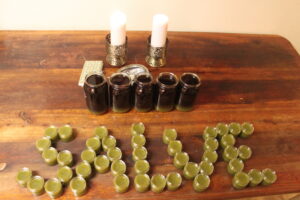
Our topical salve is probably the best illustration of how absurd this situation can become. We have spent more than a decade making what we believe is one of the most effective and thoughtfully formulated natural salves on the market. It wasn’t created by taking some generic salve base, dumping CBD into it and putting a pretty label on the jar. We engineered the formulation for absorption. We use a long list of natural ingredients chosen for what they contribute to the finished product, and we incorporate full-spectrum hemp extract into that formulation.
If the new federal rule takes effect as written, we could take the CBD out. Then we would have salve. Just salve. It might still be a lovely salve, but it wouldn’t be the medicine we spent twelve years making. The other option is to reformulate around isolates we tested and rejected eleven years ago. Or we stop selling the CBD products. All of them.
What Happens to the People Using the Medicine?
There is another part of this conversation that seems to get lost whenever lawmakers talk about hemp in milligrams, definitions and regulatory categories: What happens to the people using the medicine?
Some of our customers have been using Sisters’ products for years. This is particularly true of our topical salve. We developed that formulation ourselves, and after nearly twelve years, we still don’t know of another product made the same way. If we take the CBD out to comply with the new federal standard, we haven’t “reformulated” their medicine. We’ve taken their medicine away.
We already know what that looks like because it happened to us in Canada. When regulatory changes effectively cut our Canadian customers off from our products in 2019, many of them contacted us asking what they were supposed to do. We couldn’t send them the medicine anymore, so we did the next best thing we could think of: we spent hours online and on the telephone with former customers, coaching them through how to make versions of the medicine themselves.
It wasn’t particularly good business. It was, however, the right thing to do.

And if that becomes necessary again, we will help people however we can. But let’s be clear about the absurdity of that outcome. A small California company that has spent more than a decade developing, testing and consistently making a non-intoxicating topical medicine may be prohibited from selling it to longtime customers, while those same customers are left trying to recreate it themselves in their kitchens.
There is a human being on the other end of every regulatory decision. There is also a business. Our sales have already fallen from approximately $100,000 a month before the pandemic to roughly $9,000 a month today. If the CBD line disappears and licensing doesn’t grow quickly enough to replace that revenue, this isn’t simply another difficult year for Sisters of the Valley.
We could lose the farm. That’s not melodrama. It’s arithmetic. The farm is where this work began. It’s where we have grown the plants, developed the medicines, trained Sisters, welcomed journalists and filmmakers, and built the strange little company that somehow survived everything thrown at it for nearly twelve years.
So when we say the new federal rules could eliminate our CBD line, we aren’t talking about changing a few SKUs on a website. We’re talking about customers losing medicine they have relied upon for years. We’re talking about the possible loss of the business that makes that medicine. And we’re talking about the possible loss of the place where all of it began. That is why we can’t wait until December 11 to figure out what comes next.

We Understand What Washington Was Trying to Fix
There is a legitimate issue underneath all of this. The hemp industry changed dramatically after legalization. Companies found ways to manufacture and sell intoxicating hemp-derived products, and lawmakers became concerned that products capable of getting people high were being sold under rules intended for hemp. We understand the desire to regulate that.
What we don’t understand is solving that problem by potentially eliminating non-intoxicating, full-spectrum plant medicines that were never the problem. Our customers aren’t buying our CBD oil to get stoned. They aren’t eating our salve. They aren’t smoking the tea. We aren’t manufacturing laboratory cannabinoids designed to sneak around marijuana laws. We are using the naturally occurring compounds in a plant.
This isn’t a healing endeavor they’re engaged in. It is a regulatory endeavor. And when regulation stops distinguishing between the thing causing the problem and everything that happens to share a molecule with it, small businesses like ours become collateral damage.
And Then There Is December 11
Originally, the new federal hemp restrictions were supposed to take effect November 12. Congress gave the hemp industry a reprieve—sort of. The deadline has now been pushed to December 11, 2026. That also happens to be the day the current federal funding measure expires. So December 11 is now both the date our entire CBD line could become federally noncompliant and the next deadline for Congress to keep the federal government funded.
You can’t make this stuff up. Congress has essentially given itself until the same day it could shut down the government to decide what it is ultimately going to do with hemp. Perhaps lawmakers will replace the 0.4-milligram standard with something more sensible. Perhaps they will delay it again. Perhaps they will leave it exactly as it is. And perhaps they will be fighting over whether the government itself stays open.
Meanwhile, those of us who actually have businesses to run are supposed to make decisions about inventory, manufacturing, packaging, banking, ecommerce and customers without knowing which set of rules we will be operating under ninety days from now. Hope is not a business plan.
Platforms Don’t Have to Wait for Congress
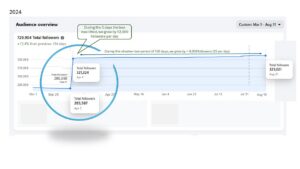
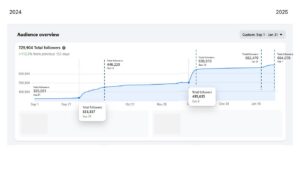
The government doesn’t control all the clocks. Payment processors, ecommerce platforms, banks, advertising companies and technology providers make their own risk decisions, and they don’t have to wait until a law takes effect. Square recently notified us that the online store we established through them has to be shut down by November 10 because we are primarily a CBD business—more than a month before the new federal hemp restrictions are now scheduled to take effect.
We don’t yet know whether that decision will ultimately affect only the Square online store or other Square services connected to our business. But it illustrates the larger problem perfectly. Congress doesn’t have to shut us down. The infrastructure platform owners will do it for them.
We’ve Been Through This Rodeo Before
None of this is entirely new to the Sisters. For nearly twelve years, we have operated in an industry where the rules change, regulators change their interpretations, banks change their risk policies and technology companies suddenly decide that businesses they happily served yesterday are businesses they cannot possibly serve today.
We worked hard to obtain California state certifications for our operations. Then California changed the regulatory landscape and we found ourselves unable to renew them. Losing those certifications cost us other things. Our Better Business Bureau accreditation went away. Financial platforms became more difficult. Banking became more difficult. Payment processing became more difficult. The walls kept moving inward, and we kept making the medicine.
That leaves us facing essentially the same choice today. We can stop, or we can keep doing what we have been doing for nearly twelve years: make the medicine, serve the people who rely upon it, and figure out another way to get it to them. But there is one lesson we have finally learned well enough that we don’t intend to learn it again.
We Have to Build Our Own Platforms
Not because a convent full of Weed Nuns has some burning desire to become a technology company. We don’t. We have enough to do. But the major platforms will gladly shut down a small business like ours in order to preserve their banking privileges. We know because they have done it before.
Increasingly, the infrastructure required to run an ordinary online business—payments, banking, ecommerce, advertising and communications—is controlled by companies whose tolerance for businesses like ours lasts exactly as long as their banks permit it. That means independence isn’t philosophical anymore. It’s infrastructure.
We need systems that cannot disappear because somebody else’s compliance department sends us an email on Friday afternoon. But building independent business infrastructure solves only half the problem. We also have to make sure there are legal roads through which the medicine itself can reach people. And strangely enough, while one road has been closing, another has been opening.

Enter the Dispensary
During the past year, the Sisters have begun moving into licensed cannabis dispensaries through licensing partnerships in California and Oregon. We thought we knew cannabis. Then dispensaries began teaching us how much we didn’t know.
We knew flower. We knew pre-rolls. We knew medicine. We knew how to tell the Sisters’ story. And we knew there were people who wanted Sisters-branded plant medicine. What we hadn’t fully appreciated was what it means to become a full-service cannabis brand inside a modern dispensary. Flower and pre-rolls are only part of that world.
In California in August 2026, consumers bought approximately $101 million in flower, $97 million in vape pens, $61 million in pre-rolls and $36 million in edibles. Vape pens alone were nearly as large a category as flower. We entered the dispensary world thinking that getting Sisters flower and pre-rolls onto dispensary shelves was the objective. Now we understand that it was the beginning.
If we intend to become a serious cannabis brand, then we have to be where cannabis consumers actually are. That means flower and pre-rolls, but it also means vape pens, gummies and other edibles, and—depending upon the market and the partner—other forms of plant medicine as well.
California and Oregon Became Our Classrooms
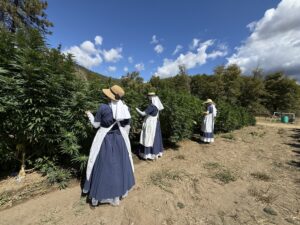
Our licensing work in California has taught us lessons about inventory, reporting, retail relationships, budtender education, promotions, marketing and the enormous difference between getting a product onto a dispensary shelf and getting that product off the shelf and into someone’s hands. Oregon is teaching us different lessons. We have been working directly with cultivators and operators, blessing the crops, developing the products, visiting dispensaries, working through packaging decisions and learning how the Sisters translate into another state’s cannabis culture.
Some lessons have been expensive. Some have been humbling. Some have been exhilarating. That’s what learning curves are for. And somewhere along that learning curve, something became obvious: the Sisters do not need to build factories all over America. We don’t need to become cultivators, manufacturers or distributors in every state where cannabis is legal. There are already excellent people doing those things.
What We Need Are Honorable Partners
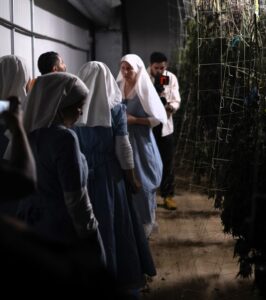
We need licensed partners who understand their regional markets and regulations. We need people who grow excellent plants and make excellent products. We need operators who know how to manufacture, distribute and sell within their own states. We need people who respect the medicine and understand what the Sisters’ name means.
They bring the infrastructure and local expertise. We bring nearly twelve years of brand history, formulations, intellectual property, imagery, an international following and a story that people already know. Most importantly, we bring the Sisters.
That model is fundamentally different from the business we built during our first decade. For years, we grew plants, made medicine, packaged it and shipped it from our farm to customers around the world. That model took us farther than we ever imagined. Before the pandemic, Sisters of the Valley was doing approximately $100,000 a month in sales. Today, monthly sales are now less than 10% of that.
We can spend all our energy trying to rebuild exactly what existed before, or we can recognize what the past several years have been trying rather insistently to teach us: the old delivery system is broken, even though the mission is not.
Licensing Changes the Delivery System, Not the Mission
This distinction matters to us. We aren’t abandoning CBD for marijuana. We aren’t suddenly deciding that the Sisters need to become some giant recreational cannabis company. We aren’t chasing whichever product happens to be fashionable this year.
CBD was never the mission. Dispensaries aren’t the mission. Licensing isn’t the mission. Even cannabis isn’t the mission. They are vehicles. The mission is getting the most amount of plant medicine to the most amount of people, in an honorable and ethical way. That is the space we claim.
For our first decade, ecommerce and federally legal hemp gave us a way to pursue that mission. If Washington closes that road, regulated cannabis markets offer another one. Licensing gives us a way to travel that road without trying to own every truck, pave every highway and operate every tollbooth ourselves.
This May Be the Pivot We Didn’t Ask For
There is still uncertainty around what happens next. Congress can change the law. The deadline can move again. The standard can be rewritten. We hope lawmakers find a way to distinguish intoxicating hemp products from non-intoxicating, full-spectrum CBD medicines before December 11. We genuinely hope they do. But we cannot run the business on the assumption that somebody else will solve this for us.
We’ve spent nearly twelve years operating in a space where government rules, banking policies and corporate risk departments can change the future of our business with very little notice. We’ve learned to pivot. We have also learned that every time somebody closes a door on the Sisters, we eventually discover another door we hadn’t noticed because we weren’t yet forced to look for it.
This time, we can already see it. Build independent platforms so we aren’t perpetually at the mercy of companies that can switch us off. Build licensing partnerships so the medicine can be made legally and locally inside regulated markets. Expand beyond flower and pre-rolls into the forms of plant medicine people are actually buying. Work with honorable partners who already know how to grow, manufacture, distribute and sell in their states. And let the Sisters do what the Sisters are supposed to do: steward the medicine, protect the brand, tell the story, bless the work, and get the medicine to the people.
Maybe Congress will save our CBD line. Maybe it won’t. Maybe the regulations will change again. They probably will. We’ve been through this rodeo before. The mission doesn’t change. We just find another road.




Comments are closed.